
-
Arri Embroidery:
-
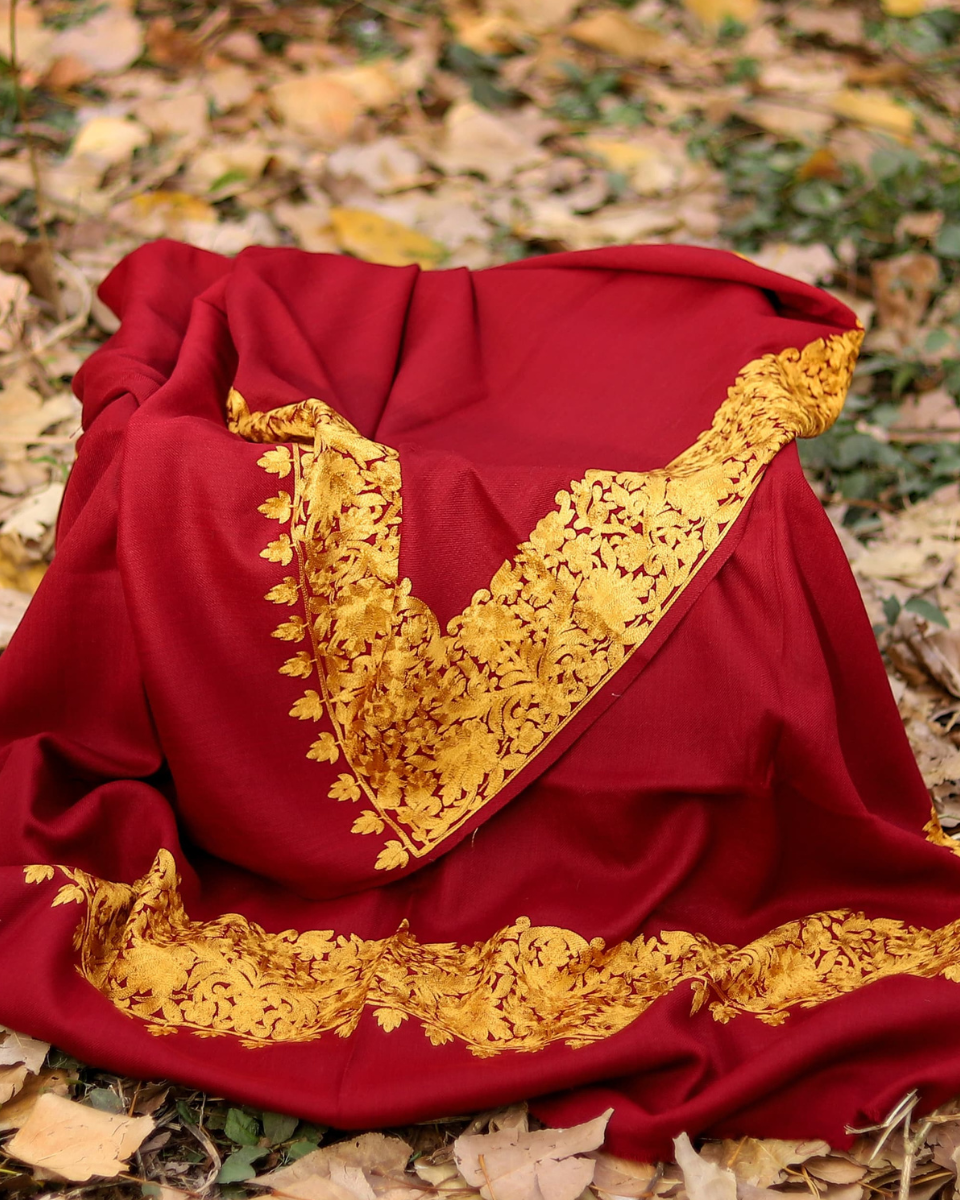
The word “Arri” refers to a distinctive type of hand embroidery often performed using fine silk or wool threads. The technique involves the use of needlework to create detailed patterns along the edges of the shawl. The designs usually consist of floral motifs, paisleys, vines, leaves, and other traditional Kashmiri patterns. The embroidery is delicate and intricate, requiring considerable time and expertise to complete.
-
The Arri embroidery typically features a symmetrical layout, with the designs often being repeated or mirrored along the shawl’s borders, giving it a balanced and harmonious appearance.
-
-
Focus on the Border:
-
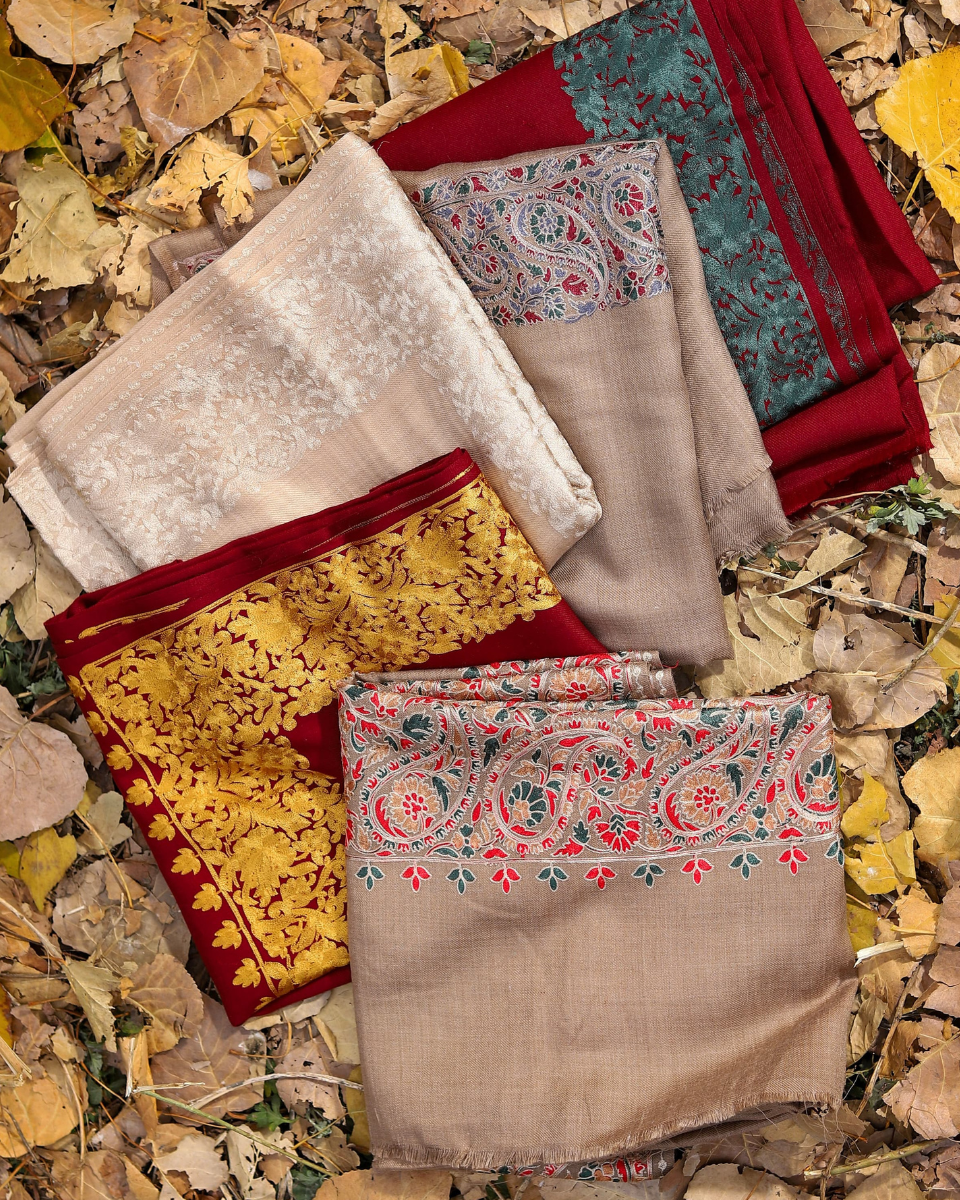
The primary feature of Arri Border Shawls is the border embroidery, which is typically done on all four edges of the shawl. The borders are the most decorated and often feature dense, fine designs that contrast beautifully with the more understated, plain center of the shawl. This contrast draws attention to the exquisite work along the borders, making the shawl look elegant and refined.
-
The borders may feature more ornate motifs, while the center of the shawl remains relatively simple, allowing the embroidered edges to stand out.
-
-
Color Palette:
-
Arri Border Shawls come in a variety of colors, but they often feature neutral or soft base colors such as cream, beige, gray, or light pastels. The embroidery is usually done in vibrant silk threads, which can be in shades like rich reds, greens, blues, and golds. The vibrant contrast between the embroidery and the base color of the shawl gives it an opulent, eye-catching appearance.
-
In some cases, the shawl may have multi-colored borders, while the center of the shawl remains one consistent color, creating a stunning visual effect.
-
Weaving and Craftsmanship:
-
Arri Border Shawls are typically handwoven using traditional Kashmiri techniques, often on handlooms, which contributes to the uniqueness of each piece. The fine wool is carefully spun and dyed, and then woven into a soft, smooth fabric.
-
After weaving, the Arri embroidery is meticulously added to the shawl’s borders by skilled artisans. This process is done by hand, and the amount of time required to complete a shawl can range from weeks to months, depending on the intricacy of the embroidery. The shawl’s border is often worked on separately and then carefully stitched into place, ensuring that the embroidery is perfect and the patterns are consistent throughout.
Cultural Significance:
-
Arri Border Shawls are a significant part of Kashmiri culture and are often considered a symbol of wealth, elegance, and refinement. These shawls are worn during special occasions, weddings, and cultural celebrations. In Kashmir, they are also seen as a mark of status and are often passed down as family heirlooms.
-
The detailed craftsmanship of the embroidery and the luxurious material make these shawls prized possessions. The skill involved in their creation is passed down through generations, making each shawl a piece of wearable art that carries cultural and historical significance.
Uses:
-
Formal Wear: Arri Border Shawls are often worn for formal and special occasions. Their intricate designs and luxurious materials make them the perfect accessory for weddings, festivals, and other ceremonial events. These shawls add sophistication to both traditional and contemporary outfits.
-
Winter Wear: Due to the high-quality wool and Pashmina materials used, Arri Border Shawls are also ideal for winter wear. They provide warmth and comfort while maintaining a lightweight feel, making them versatile for various climates.


Reviews
There are no reviews yet.